
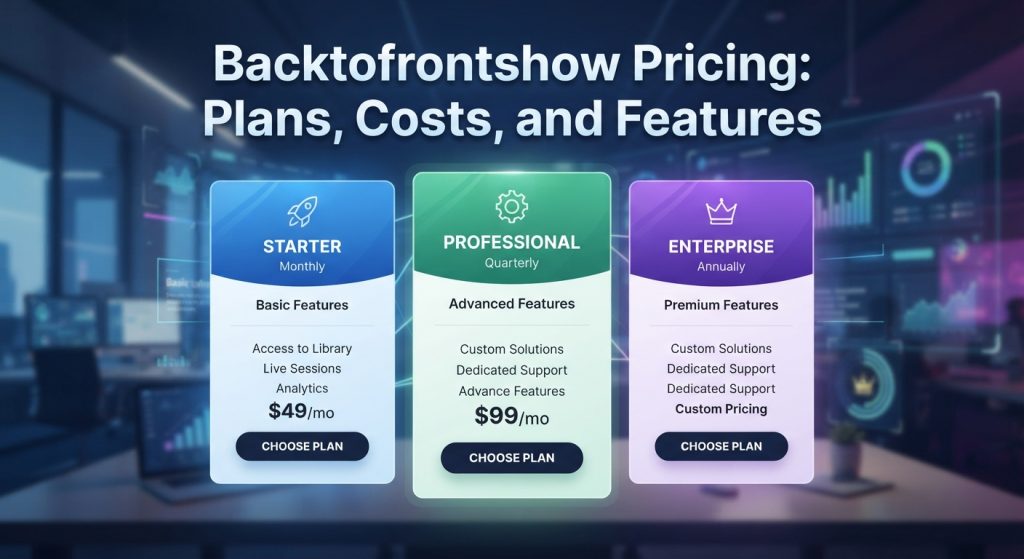
Choosing the right software or service plan is never just about the number on the price tag — it’s about matching the tools you get with what you’ll actually use. If you’re evaluating backtofrontshow pricing, this guide breaks down what a typical plan structure looks like, the cost tiers you should expect, and the features that separate free access from premium performance.
Why Pricing Structure Matters
Before diving into the specifics of backtofrontshow pricing, it’s worth understanding why tiered pricing exists in the first place. Most modern platforms — whether they’re built for content creators, event organizers, or business teams — split their offering into multiple tiers so users only pay for the capability level they need. A casual user browsing basic features shouldn’t be charged the same as a power user running advanced automation, team collaboration, or high-volume workflows. This is the logic behind almost every SaaS or subscription-based pricing model today, and it’s the same logic that shapes how a service like this structures its plans.
Typical Plan Tiers
When examining backtofrontshow pricing, you’ll generally find offerings organized into three or four tiers, each aimed at a different type of user:
1. Free / Starter Plan
This entry-level tier is designed for individuals who want to explore the platform before committing financially. Expect:
- Limited access to core features
- Capped usage limits (storage, projects, or monthly actions)
- Basic customer support (often community-based or email-only)
- No advanced customization or integrations
The Free plan is ideal for testing the waters, small personal projects, or anyone deciding whether to upgrade later.
2. Basic / Standard Plan
This is usually the most popular tier for individual professionals or small teams. It typically includes:
- Expanded usage limits
- Access to intermediate features (custom templates, more storage, additional users)
- Priority email support
- Removal of watermarks or branding, if applicable
This tier tends to strike the best balance between affordability and functionality, making it a common starting point for serious users.
3. Pro / Business Plan
Aimed at growing teams or businesses with higher demands, this tier often unlocks:
- Full feature access, including advanced analytics or reporting
- Team collaboration tools (multiple seats, shared workspaces, permission controls)
- API access or third-party integrations
- Faster, dedicated customer support (live chat or phone)
4. Enterprise Plan
For large organizations with custom needs, the Enterprise tier is usually quote-based rather than fixed. Features commonly include:
- Custom contracts and volume discounts
- Dedicated account management
- Advanced security, compliance, and SSO support
- Service-level agreements (SLAs) guaranteeing uptime and support response times
Factors That Influence Cost
Understanding what drives the cost within different tiers can help you interpret pricing pages more accurately. Common cost drivers include:
- Number of users or seats — Many platforms charge per user per month, meaning costs scale directly with team size.
- Usage volume — Storage limits, number of projects, or monthly transaction caps often determine which tier you need.
- Billing frequency — Annual billing frequently comes with a discount (commonly 15–25% savings) compared to monthly billing.
- Add-ons — Optional features like advanced AI tools, extra integrations, or premium support are often priced separately from the base plan.
- Contract length — Multi-year commitments sometimes unlock lower effective rates, though they reduce flexibility.
If you’re comparing backtofrontshow pricing against competitors, it’s worth calculating the effective cost per user per month after accounting for these variables, rather than just looking at the advertised sticker price.
Features to Look For at Each Price Point
Not all pricing tiers are created equal, and it pays to look past the marketing copy. Here’s what to evaluate:
- Core functionality: Does the base plan actually let you accomplish your primary goal, or is it a stripped-down demo designed to push upgrades?
- Scalability: Can you move between tiers easily as your needs grow, without losing data or starting over?
- Support quality: Free and entry-level plans often come with minimal support — confirm what response times look like before you need help urgently.
- Hidden limits: Watch for caps on storage, API calls, or active projects that aren’t obvious from the pricing page headline.
- Cancellation and refund policies: Especially relevant for annual plans, since switching plans mid-cycle isn’t always straightforward or fully refundable.
Is It Worth the Cost?
Determining whether a plan is worth its price depends heavily on your specific use case. A freelancer or hobbyist may find the free or basic tier more than sufficient, while a growing business might quickly outgrow anything below the Pro tier. The key is to map your actual requirements — team size, feature needs, expected usage volume — against what each tier offers, rather than defaulting to the middle option simply because it “feels balanced.”
When researching backtofrontshow pricing, it’s also worth checking for:
- Seasonal promotions or discount codes
- Free trial periods for paid tiers
- Nonprofit, educational, or startup discounts, which many platforms offer but don’t always advertise prominently
Final Thoughts
Pricing decisions shouldn’t be made in isolation from your actual goals. Before committing to any tier, take advantage of free trials where available, read the fine print on usage limits, and calculate your realistic monthly or annual cost — not just the advertised starting price. Doing this homework upfront ensures you land on a plan that fits both your budget and your workflow, without paying for capacity you’ll never use or getting stuck with limitations that slow you down.