
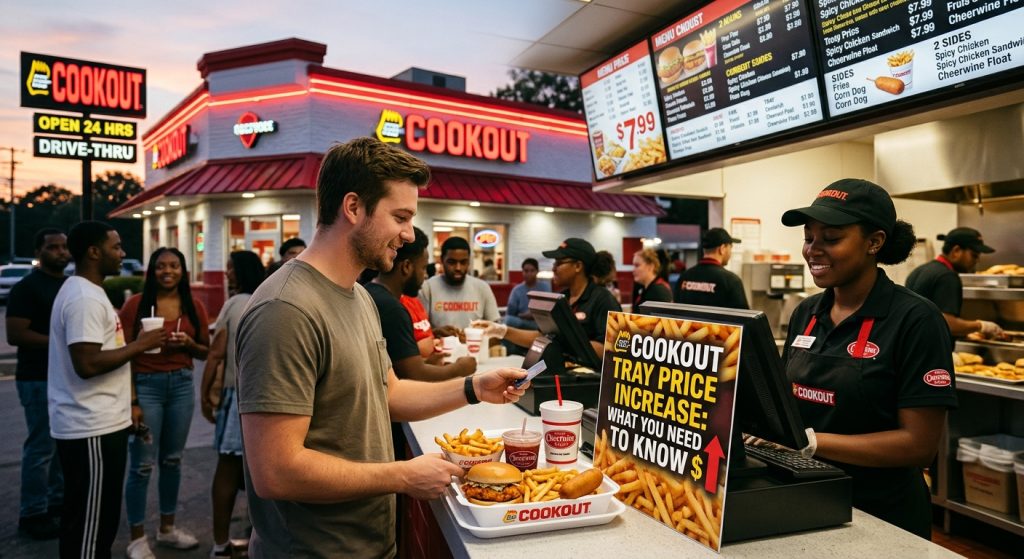
If you’ve been a regular at Cook Out, the Southern drive-thru chain famous for its build-your-own trays, you may have noticed your receipt creeping upward. The cookout tray price increase isn’t just in your head. It reflects a broader squeeze on restaurants and grocery shoppers alike. Here’s what is driving it, what it means for your wallet, and how to keep enjoying your favorite tray without overspending.
What Is a Cookout Tray?
A tray is the signature value meal at Cook Out. You pick an entrée, such as a burger, a chicken sandwich, BBQ, or a hot dog. Then you add two sides, from hush puppies and fries to onion rings, corn dogs, and coleslaw, plus a drink, often one of the chain’s many milkshakes. The appeal has always been the combination of choice and low price, which is exactly why even a small change in cost gets noticed.
(Insert the current tray price at your local Cook Out here. Prices vary by state and location, so check the menu or app for the latest number.)
Why the Cookout Tray Price Increase Is Happening
No single cause explains it. Several pressures hit at once, and restaurants rarely absorb them forever.
1. Beef is more expensive than ever
Beef is the biggest culprit. The American Farm Bureau Federation found that ground beef rose 5.5 percent to $14.06 for two pounds, partly because of reduced cattle supplies as ranchers rebuild herds after years of drought. That is the highest beef price recorded in the survey. Separately, a retail analysis found that fresh ground beef was up nearly 15 percent and beef hot dogs up 18.3 percent year over year in the week ending May 16, 2026.
Burgers and hot dogs anchor many Cook Out trays, so when these ingredients cost more, the cookout tray price increase follows almost automatically.
2. General inflation is still running hot
Beef isn’t alone. Overall U.S. inflation rose 4.2% over the 12 months ending in May, according to the Farm Bureau. That pressure reaches restaurants through wages, rent, utilities, packaging, and delivery costs. A fast-food chain can only hold menu prices steady for so long when nearly every line of its budget is rising.
3. Sides and extras cost more too
The trays are not just about the main item. Canned pork and beans, for example, saw the largest percentage jump in the Farm Bureau’s basket at 13.8%, with higher aluminum costs raising can production costs. Aluminum, packaging, and cooking oil all affect what it costs to produce fries, hush puppies, and cups. Soda isn’t immune either: one analysis found it up 11.4% year over year.
4. Labor, transport, and refrigeration
The Farm Bureau also pointed to higher labor expenses and increased transportation and refrigeration costs. Cook Out runs a high-volume, late-night, drive-thru model, so staffing and logistics weigh heavily on its margins.
How Big Is the Impact on Your Wallet?
Because the chain is known for value, even a modest rise stands out. A tray might go up by a dollar or less, but if you order one weekly, that adds up over a year. For a family of four, the difference can be noticeable.
Context helps, though. The Farm Bureau noted that when adjusted for inflation, the cost of a summer cookout is actually lower than it was in 2016. In other words, a cookout tray price increase may sting at the register, but in real terms food is not dramatically more expensive than it was a decade ago. It’s the speed of the recent rise that makes it feel sharp.
Will Prices Keep Rising?
That depends mostly on beef. Cattle herds take years to rebuild, so analysts don’t expect relief overnight. Federal data show ground chuck prices continuing to climb. If cattle supplies stay tight and inflation stays elevated, further menu adjustments across the fast-food industry are possible. Treat any prediction with caution, as food prices can shift with weather, trade policy, and energy costs.
How to Save on Your Next Tray
You can’t control the price, but you can control how you spend.
- Use the app or local deals. Check whether your location offers digital coupons or combo promotions.
- Swap the pricier items. Chicken is often cheaper than beef. Chicken thighs were the only tracked item to fall in price (down 1.1%) in the Memorial Day analysis. A chicken-based tray may help you dodge the worst of the beef spike.
- Share and split. Many sides are generous enough to split between two people.
- Skip the premium add-ons. Milkshakes are tempting but can make up a large part of the total. A standard drink keeps the tray cost down.
- Compare locations. Prices differ by region, so the same tray can cost a little more or less depending on where you order.
- Order for groups smartly. For a crowd, compare tray prices with à la carte items. Sometimes a few sandwiches and shared sides beat individual trays.
The Bottom Line
The cookout tray price increase comes down to expensive beef, stubborn inflation, and higher labor, packaging, and transport costs. Cook Out is not alone, since nearly every burger joint and grocery store faces the same pressures. Chains that built their reputations on value will feel the tension most as they try to balance affordability against rising bills.
The best approach is to stay informed, check your local menu before you order, and use simple swaps to keep the cost in check. Your tray may cost a little more than last year, but with smart choices it can still be one of the better meal deals around.
READ ALSO: https://eliteguestpostsagency.com