
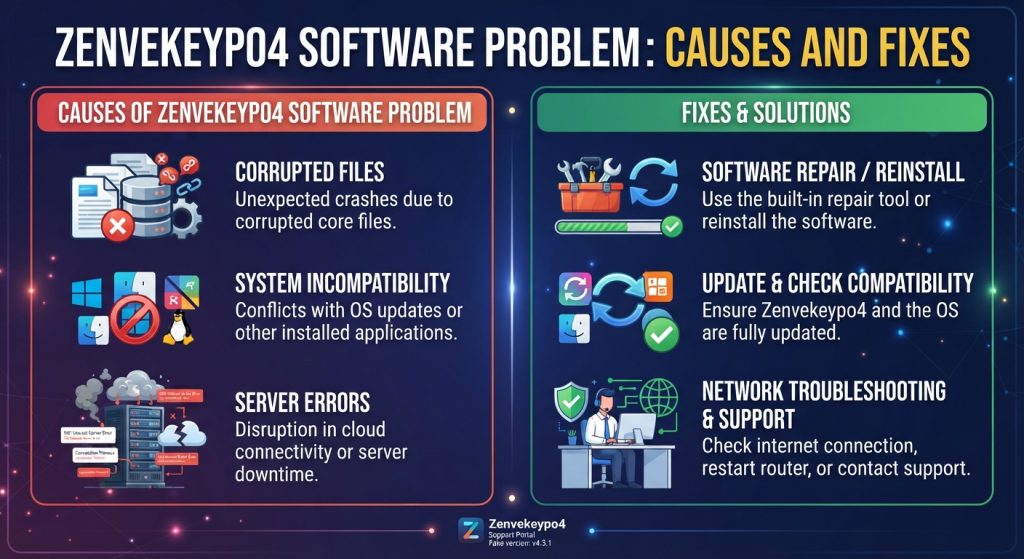
Software issues can disrupt daily operations, slow down productivity, and create unnecessary stress for both casual users and IT professionals. One such issue that users have reported is the zenvekeypo4 software problem, a term used to describe a range of performance, compatibility, and functionality glitches that can occur within this platform. Whether you’re experiencing sudden crashes, slow load times, or unexpected errors, understanding the root causes behind the zenvekeypo4 software problem is the first step toward a lasting fix.
In this article, we’ll break down the most common causes of these issues and walk through practical, step-by-step solutions to get your system running smoothly again.
Understanding the Zenvekeypo4 Software Problem
Before diving into fixes, it helps to understand what typically triggers software malfunctions like this one. In most cases, the zenvekeypo4 software problem doesn’t stem from a single cause but rather a combination of factors — outdated files, conflicting programs, insufficient system resources, or corrupted installation data. Because modern software relies on multiple background processes, drivers, and third-party integrations, even a small conflict can cascade into a larger malfunction.
Users report a variety of symptoms, including:
- Application freezing or crashing unexpectedly
- Slow response times during routine tasks
- Error messages appearing during startup or file saving
- Failure to sync with cloud services or connected devices
- Incomplete updates or installation failures
Identifying which symptom you’re facing can help narrow down the exact cause and speed up the troubleshooting process.
Common Causes Behind the Issue
1. Outdated Software Version
One of the most frequent triggers is simply running an outdated version of the program. Developers regularly release patches to fix bugs, close security gaps, and improve compatibility with newer operating systems. If updates are ignored for too long, the software becomes more prone to instability — a major contributor to the zenvekeypo4 software problem.
2. Corrupted Installation Files
Sometimes, the installation process itself doesn’t complete correctly due to interrupted downloads, power outages, or insufficient storage space. This results in missing or corrupted files that cause the program to behave erratically or fail to launch altogether.
3. System Resource Limitations
Running resource-intensive software on a device with limited RAM, an aging processor, or a nearly full hard drive can lead to sluggish performance and frequent crashes. If your system doesn’t meet the minimum requirements, you’re more likely to encounter recurring glitches.
4. Conflicting Background Applications
Antivirus programs, firewalls, and other third-party applications can sometimes interfere with normal software operations. These conflicts often manifest as blocked processes, permission errors, or unexpected shutdowns.
5. Driver and Compatibility Issues
Outdated or mismatched drivers — particularly graphics, network, or audio drivers — can create friction between your operating system and the software you’re trying to run. This is especially common after a major OS update that isn’t yet fully supported by the software developer.
6. Network Connectivity Problems
For programs that rely on cloud syncing or online authentication, an unstable internet connection can trigger errors that appear software-related but are actually rooted in connectivity issues.
Step-by-Step Fixes
Step 1: Update the Software
Always start with the simplest fix. Check for the latest version of the application and install any pending updates. Developers often release fixes for known bugs shortly after they’re reported, so this single step resolves a surprising number of cases.
Step 2: Reinstall the Program
If updating doesn’t help, uninstall the software completely, restart your device, and perform a fresh installation. This eliminates any corrupted files that may be causing instability.
Step 3: Free Up System Resources
Close unnecessary background applications, clear temporary files, and check available storage space. If your device consistently struggles to keep up, consider upgrading your RAM or switching to a solid-state drive for better performance.
Step 4: Temporarily Disable Conflicting Programs
Try disabling your antivirus or firewall temporarily (only while troubleshooting) to see if the issue persists. If the problem disappears, you’ll need to adjust your security settings to allow the software to run without interference.
Step 5: Update Drivers
Visit your device manufacturer’s website or use built-in driver update tools to ensure your graphics, audio, and network drivers are current. Outdated drivers are a common but often overlooked cause of software instability.
Step 6: Check Your Internet Connection
If the issue involves syncing or online features, run a speed test and restart your router. A wired connection can also provide more stability than Wi-Fi for data-heavy tasks.
Step 7: Run the Software in Compatibility Mode
If you’re using an older version of the program on a newer operating system, try running it in compatibility mode. This can resolve many of the display, performance, and functionality errors tied to OS mismatches.
Step 8: Contact Support
If none of the above steps resolve the issue, reach out to the software’s official support team. Provide detailed information about your system specs, error messages, and the steps you’ve already tried — this speeds up the resolution process significantly.
Preventing Future Issues
Once you’ve resolved the zenvekeypo4 software problem, a few preventive habits can help you avoid running into it again:
- Enable automatic updates whenever possible
- Regularly clear cache and temporary files
- Keep your operating system and drivers up to date
- Perform periodic malware scans to rule out hidden conflicts
- Back up important data before major updates or reinstalls
Final Thoughts
Software issues, while frustrating, are rarely unsolvable. By understanding the underlying causes — from outdated versions and corrupted files to resource limitations and driver conflicts — you can systematically work through fixes rather than guessing at random solutions. Whether you’re a casual user or managing multiple systems professionally, taking a methodical approach will save time and reduce recurring headaches down the line.
READ ALSO: https://eliteguestpostsagency.com